
Eco-Friendly Metal Building Designs for Sustainable Construction — Benefits & Practical Solutions
Eco-friendly metal building design focuses on recycled materials, energy efficiency, and long service life to cut the environmental impact of new construction while delivering durable, cost-effective buildings. This article shows how recycled steel, insulated systems, and prefabrication lower embodied carbon, reduce waste, and improve operational efficiency in Northern California climates. We’re based in Woodland, CA and serve Northern California including Sacramento, Vacaville, and Fairfield. We provide turn-key metal/steel building services—permit processing, site preparation, concrete foundations, and metal building installation. By prioritizing recyclability, solar-ready roofs, and long-lasting coatings, we tackle common concerns like material shortages, maintenance, and energy use with resilient alternatives to traditional wood construction. Below we explain why sustainable metal buildings make sense, how prefabrication shortens schedules and cuts waste, which durable features extend a building’s life, and how Ibarra Construction delivers local, turn-key solutions that support green building goals. Throughout, we weave practical design tips, material trade-offs, and regional considerations for owners and specifiers pursuing green steel buildings.
Ask AI About This Guide
Opens your AI assistant with a question ready to send.
Why Are Sustainable Metal Buildings a Smart Choice?
Sustainable metal buildings offer high recyclability, strong energy performance, and long service lives, which together reduce lifecycle impacts versus many conventional options. Using recycled steel lowers demand for new ore and cuts embodied carbon. Insulated metal panels and airtight assemblies boost thermal performance, and durable coatings mean less maintenance and fewer replacements over time.
The table below summarizes the core sustainability attributes of metal buildings versus traditional wood buildings to help designers and owners weigh the trade-offs.
The comparison that follows highlights key sustainability attributes for metal versus traditional wood construction.
| Category | Metric | Metal Buildings | Traditional Wood Buildings |
|---|---|---|---|
| Recyclability | End-of-life recycling | High — steel is widely recycled | Moderate — mixed recyclability |
| Lifespan | Typical service life | 50+ years with protective coatings | 30–50 years; susceptible to rot |
| Energy Savings | Operational efficiency | High when paired with insulation and solar-ready roofs | Moderate; often requires retrofits |
| Maintenance | Upkeep frequency | Low — corrosion protection and coatings reduce upkeep | Higher — painting, pest control, repairs |
This comparison shows metal buildings’ strengths in recyclability and longevity, which help lower lifetime environmental impact and cut replacement needs.
Metal buildings also support circularity through modular components and standardized parts that make disassembly and reuse easier. Those choices reduce waste over multiple building lifecycles and create opportunities to return reclaimed elements to the supply chain. Next, we’ll look specifically at how recycled steel improves eco-friendly construction.
How Does Recycled Steel Enhance Eco-Friendly Construction?
Using recycled steel cuts embodied carbon by relying on existing material streams instead of energy‑intensive primary steelmaking. Modern mills can produce high-quality structural steel from feedstocks with significant recycled content, reducing upstream emissions while keeping structural performance reliable. When sourced regionally, recycled steel also shortens transport distances and lowers shipping emissions for Northern California projects. Choosing recycled steel supports circular-economy metrics used in LEED and other green-rating systems, which helps with sustainability reporting and lifecycle assessments.
Recycled steel is readily available and structurally consistent, making it a practical choice for barns, warehouses, and solar-ready roofs that benefit from factory tolerances. That material reliability leads naturally into the energy-efficiency options metal buildings can include.
What Energy Efficiency Features Do Metal Buildings Offer?
Metal buildings can incorporate several proven energy-efficiency strategies through component selection and passive design. Insulated metal panels, spray foam, and insulated wall modules reduce conductive heat transfer and improve airtightness. Reflective roof coatings and cool-roof finishes reduce solar heat gain. Passive moves—correct orientation, roof overhangs, natural ventilation, and thermal breaks—work well across Northern California’s varied microclimates. Specifying solar-ready roofs and allowing space for future PV installations aligns the envelope with net-zero goals and makes future upgrades straightforward.
Typical insulation assemblies pair insulated metal panels with vapor barriers to raise effective R-values and cut HVAC loads. These measures lower operational emissions and improve comfort—another reason prefabrication can be valuable for controlling on-site quality and waste.
Benefits of Eco-Friendly Metal Building Construction
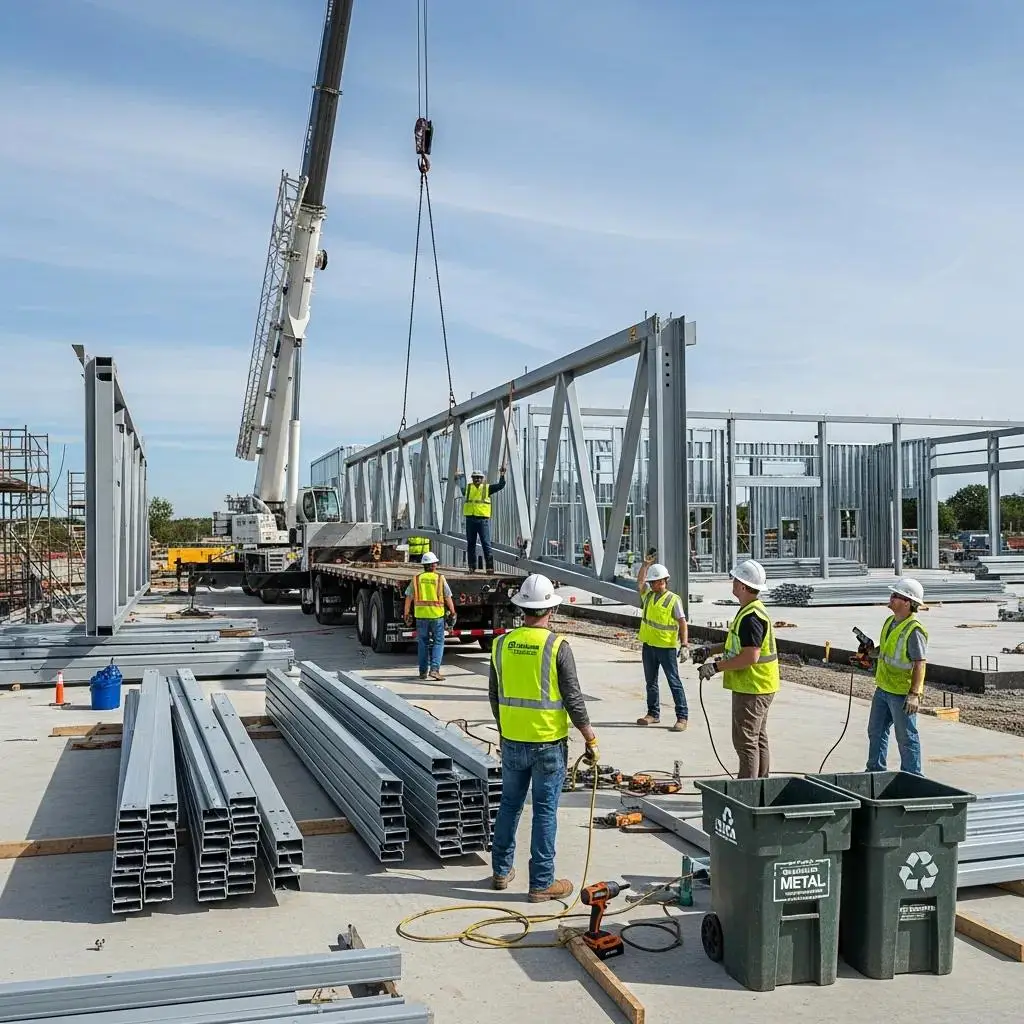
Prefabrication shifts repetitive fabrication into a controlled factory environment, which cuts on-site waste and shortens schedules. Offsite production improves accuracy, reduces scrap, and limits rework. Standardized modules speed assembly and shorten the time the site is disturbed. For example, factory-cut components reduce on-site labor needs and accelerate weather-sensitive stages like roofing, trimming calendar time and the risk of weather damage.
The table below highlights measurable prefabrication benefits across common project metrics.
| Benefit Area | Attribute | Typical Outcome |
|---|---|---|
| Waste Reduction | Scrap minimization | 30–60% less on-site scrap |
| Time Saved | Schedule compression | 2–8 weeks faster for framing and assembly |
| On-site Disruption | Site footprint/time | Shorter site presence and less erosion risk |
By consolidating fabrication, prefabrication delivers more predictable results and consistent insulation and envelope performance, which lowers lifecycle impacts and supports sustainable practices.
Prefabrication also makes it easier to integrate recycled materials and energy systems during manufacture, tying factory controls to sustainability goals. Those efficiencies help enable the durable features that keep metal buildings in service longer.
What Are the Environmental Benefits of Offsite Fabrication?
Offsite fabrication reduces construction waste by optimizing material nesting, reusing offcuts in other builds, and recycling metal scrap inside the factory. Fewer truck trips and shorter on-site assembly reduce transport emissions and limit disturbance to soils and vegetation. Factory quality control also cuts mismatches and rework, improving insulation continuity and sealing—key factors for long-term energy performance. Together, these improvements lower a building’s embodied and operational carbon.
Factory-made components—prefabricated wall modules and roof panels—arrive ready for quick installation, limiting weather exposure and the potential for damage that creates waste. That predictability supports better site management and faster commissioning into efficient operation.
How Does Prefabrication Support Sustainable Building Practices?
Prefabrication promotes lean material use through nesting, optimized cutting patterns, and recycling offcuts, increasing yield from raw materials. Controlled manufacturing environments allow higher recycled content in steel and better application of low‑VOC finishes and protective coatings that meet green material specs. Prefabricated systems also simplify integrating solar-ready roofs, rainwater conduits, and pre-routed electrical chases for future renewable systems.
These manufacturing and design synergies reduce rework and help ensure components meet thermal and durability specs before they reach the site. Those efficiencies lower lifecycle impacts and lead into the durability advantages of metal buildings.
What Durable Features Make Metal Buildings Long-Lasting and Sustainable?
Durability comes from material choice, protective finishes, and design details that resist common failure modes and cut replacement needs. Steel resists pests and rot, and when combined with fire-rated assemblies and moisture-management strategies, service lives commonly exceed 50 years. Longer-lasting buildings need less maintenance and fewer replacements, which lowers embodied emissions over decades.
The table below lists key durability features and the outcomes they provide so you can see how these measures translate to lifecycle benefits.
| Durability Feature | Mechanism | Expected Outcome |
|---|---|---|
| Fire Resistance | Noncombustible steel components | Lower fire risk and reduced insurance concerns |
| Pest Resistance | Inorganic materials and sealed envelopes | Fewer infestations and less structural damage |
| Moisture Management | Flashing, coatings, vapor barriers | Fewer rot-related repairs and longer service life |
These durability measures reduce long-term operational costs and protect the embodied carbon invested in the structure.
Design choices like effective drainage, breathable membranes, and corrosion‑resistant coatings form a systems approach to longevity that benefits owners and the environment. Below we explain common mitigation strategies in more detail.
How Do Metal Buildings Resist Pests, Fire, and Moisture?
Steel is inorganic, so it won’t feed pests or support fungal rot the way wood can. Fire resistance comes from steel’s noncombustible nature and from specifying fire-rated cladding and assemblies that limit heat transfer. Moisture resistance depends on good details—proper flashing, vapor control layers, and corrosion-protective coatings keep water out and prevent galvanic corrosion. Paired with routine inspections, these choices greatly reduce the chance of premature failure.
Those resistance strategies also cut maintenance and repair cycles, which ties directly into why longevity matters for sustainability.
Why Is Longevity Important for Sustainable Construction?
Long service life spreads the initial embodied carbon over many years, reducing per-year carbon impact and avoiding repeated demolition and rebuild cycles. A 50-year service life lowers annual carbon amortization compared with shorter-lived alternatives, and long warranties indicate confidence in durability. Extended service life also saves owners money on repairs and replacements, freeing funds for upgrades like solar arrays. Designing for longevity therefore aligns financial resilience with environmental stewardship.
With durability and longevity in mind, here’s how a local, turn-key contractor can deliver these benefits across Northern California projects.
How Does Ibarra Construction Deliver Eco-Friendly Metal Building Solutions in Northern California?
Ibarra Construction offers turn-key metal building services tailored to Northern California projects, combining local knowledge with hands-on owner involvement to deliver sustainable results. Based in Woodland, CA, we serve Northern California including Sacramento, Vacaville, and Fairfield. We provide full turn-key metal/steel building services—permit processing, site preparation, concrete foundations, and metal building installation. Our process ties permit management, foundation best practices, and factory-installed components together to reduce delays, minimize material waste, and cut rework while supporting energy-efficient assemblies and solar-ready roofs. Owner Diego Ibarra is personally involved in projects, which keeps communication direct and craftsmanship accountable. We offer competitive pricing and warranties (up to 40–50 years on select metal buildings) to protect your long-term investment.
Our local experience helps us navigate regional codes and choose climate-appropriate details, shortening permit timelines and lowering risk. This turn-key, locally focused approach connects smart design, prefabrication, and durable specifications to deliver sustainable metal building projects that meet performance goals.
What Turn-Key Sustainable Services Does Ibarra Construction Provide?
Our turn-key services cover permit processing, site preparation, concrete foundation work, and metal building installation—each selected to support sustainability goals. Efficient permit management reduces delays that can increase waste. Thoughtful site preparation and foundation techniques limit soil disturbance and erosion. Factory-installed envelope systems and vetted installation practices preserve insulation continuity and cut on-site rework. Those coordinated services produce predictable results, better energy performance, and warranties that protect your long-term sustainability investment.
Mapping each service to a sustainability benefit makes clear how integrated delivery lowers lifecycle impacts and improves project certainty for owners.
How Can Clients Benefit from Free Estimates and Local Expertise?
Free estimates and local expertise make it easier for owners to evaluate sustainable metal building options and compare materials, insulation levels, and prefabrication trade-offs. Based in Woodland, CA, we serve Northern California including Sacramento, Vacaville, and Fairfield. Our turn-key services include permit processing, site preparation, concrete foundations, and metal building installation. Owner-led oversight by Diego Ibarra increases accountability and attention to detail, while competitive pricing and strong warranties offer both economic and environmental value. Requesting a free estimate helps you quantify trade-offs, align design choices with climate goals, and move forward confidently toward a durable, energy-efficient metal building.
Frequently Asked Questions
What are the cost benefits of choosing eco-friendly metal buildings?
Eco-friendly metal buildings often save money over their lifetime. Initial costs can be higher than basic wood structures, but lower maintenance, reduced energy bills, and longer service life usually offset that difference. Many sustainable upgrades also qualify for tax incentives and rebates, which improves the return on investment. In short, investing in durable materials and energy-efficient systems delivers both financial and environmental returns over time.
How do eco-friendly metal buildings perform in extreme weather conditions?
Properly designed metal buildings perform well in extreme weather. Steel provides strong resistance to high winds, heavy snow loads, and seismic forces when engineered to code. Insulated panels and reflective coatings help maintain comfort and efficiency in a range of climates. With correct design and engineering, metal buildings offer safety and reliability across Northern California’s diverse weather conditions.
Can eco-friendly metal buildings be customized for specific needs?
Yes. Metal buildings are highly configurable—layout, size, finishes, and functional features can all be tailored for residential, commercial, or agricultural uses. Options include solar-ready roofs, specialized insulation, and custom architectural details. Working with an experienced contractor like Ibarra Construction lets you explore design possibilities while keeping sustainability goals front and center.
What role do local building codes play in eco-friendly construction?
Local codes set the standards for safety, energy efficiency, and environmental performance. They influence material choices, insulation levels, and construction methods. Understanding and complying with local codes is essential to avoid delays and ensure your project meets sustainability targets. Ibarra Construction’s local experience helps navigate these requirements efficiently.
How do eco-friendly metal buildings contribute to energy independence?
Eco-friendly metal buildings support energy independence by making it easy to add renewable systems like solar panels and by reducing overall energy demand through better insulation and efficient design. Solar-ready roofs and high-performance envelopes let owners generate and store energy, lowering reliance on the grid and improving resilience against price changes or outages.
What maintenance practices are recommended for eco-friendly metal buildings?
Routine inspections and simple upkeep keep metal buildings performing well. Check for corrosion, ensure good drainage, and maintain insulation and seals. Clean gutters and roof surfaces as needed to prevent water buildup. Reapply protective coatings when recommended. Following these steps helps extend service life and keeps long-term costs low.
Conclusion
Choosing eco-friendly metal building designs brings clear advantages: long-term durability, better energy performance, and lower environmental impact. Using recycled materials and modern construction methods delivers buildings that meet sustainability goals and save money over time. Ibarra Construction’s turn-key approach ensures your project follows local regulations and green practices from start to finish. Request a free estimate today to see how we can help you plan and build a durable, sustainable metal building that fits your needs.